By Dragan Bozdarov
Someone I love is in a lot of pain. Because of this, I find myself driving aimlessly and for far too long. It’s not that I don’t like driving; I do. It’s just that I catch myself turning down side streets, dialing up loud and very sad music. Most people often ask, are you salty or sweet? But a better testament to your character is, are you happy or sad, musically, that is. I am defiantly salty. The odd slice of dark chocolate aside, most of the time, give me the briny stuff. When it comes to music, I prefer it to tear out my intestines. Better yet, let me feel the rubber lash them on the grainy road ahead.
Not everyone can take music like this. My wife tolerates a handful of songs until we lock fingers over the touchscreen in the car. She’s definitely sweet. Put us in a deli, and her eyes flock to the nearest glass reflecting back pastries while I taste the aged cheddar before we park. Her favourite musical era is from the 1980s, a time when everyone owned a tanning salon and smiled way too much. Looking back, I remember nothing but beer commercials and the smell of hair spray. She accuses me of being stuck in the stormier end of the 1970s and 90s. Which is fine; I prefer decades without shoulder pads.
We can all understand the universality of music and how it connects us this way. In envisioning our introduction to aliens, in his film Close Encounters, Steven Spielberg used only five tones to connect us with our celestial cousins. He imagined music contained the power to unify species separated by starlight. He is not alone in this. When it launched the Voyager Satellite deep into space in 1977, NASA and a committee headed by astronomer Carl Sagan hoped whoever caught it would find a golden record left behind. The disc included some of our planet’s anthems, covered mainly through Western culture. Almost everyone remembers Johnny B Goode by Chuck Berry. However, about half the songs have a melancholy flavour, including another US contribution, Melancholy Blues, played by Louis Armstrong. But when I imagine its discovery, I like to think of greenheads swaying to Dark Was the Night by Blind Billie Johnson. I hope so because if anything is out there, I think they would know us better than an upbeat tempo of three-chord Rock.
There is something profoundly human about sad music, its minor tones, its slow rhythm—crescendos designed to deepen the gorge below your feet. On most Sundays, I run out for coffee and bagels, but in the past few years, it’s been an excuse for one reason. I plan a circuitous route and choose a song like The Tourist by Radiohead. Even now, it satisfies my desire to parachute inward. The opening of the song descends as a final carnival ride of youth would, dredging up any remaining bits of rust. With the sun’s burnt streaks trailing the last of the crowds, I imagine the calluses of the guitarist’s fingers and feel my grip across the filthy railing, thinking, what am I waiting for? “It barks at no one else but me, like it’s seen a ghost.”
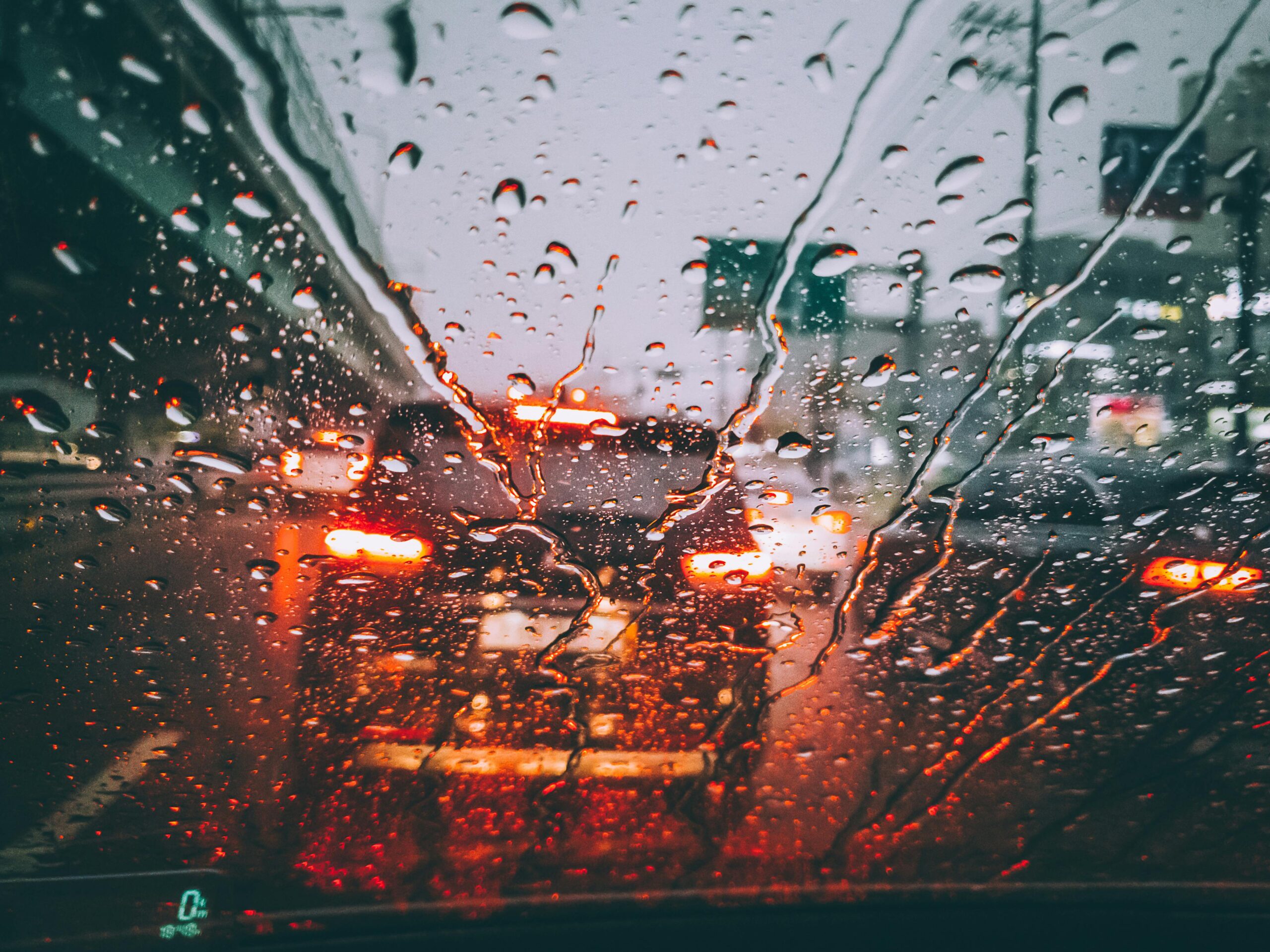
Whenever I’ve had the opportunity to drive a convertible, I veer onto deserted stretches where the trees’ canopy blocks out the din of smoking barbeques and the odd brick bungalow. It’s when I chose Great Gig In the Sky, by Pink Floyd. This lyric-less song features a haunting performance by guest vocalist Clare Torry. The only arena better to experience her orgasmic finale of screams is to wait for a rainstorm, the green ones, preferably, the types that sneak up mid-summer. It’s best to keep the top up and hope the wipers are fresh.
On most rainy days, I unlatch the screen door and wait for the first wisps of the soil-drenched sky peddling broken promises through the hallway while my wife scurries above, ensuring every window is shut. In these moments, I hum an array of up-tempo ironic pop songs, the type where, despite their happy signature, the melancholy burrows in the lyrics. Elvis Costello’s I Write the Book is a great example. With so much promise of “what love is, when you are old enough to know better,” the maestro reminds you how flawed we are as humans. “And in a perfect world, where everyone is equal, I would still own the film rights and be working on the sequel.” Ditto buddy. Let me listen to the miserable snot-filled rain crackle on the metal shed of our neighbours. They may have a few extra hours of sunlight, but at least our flowerbeds are finer.
Traumatic events spawn my maudlin side. In the wake of the horror surrounding the events of 9/11, I drove for weeks replaying Supertramp’s Hide in Your Shell. My memory is anchoredon a lakeshore route at the eastern tip of Toronto’s core, hundreds of miles from Manhattan. I was far removed from any victimizing personal impact and knew no one connected to the day’s events, but I, like many on the road, settled any itch my palm had over my car horn. I remember how heads cocked high in the city and everyone’s eyes locked with office towers.
To truly mourn the omnipotence lost, I recall playing Closing Time by Leonard Cohen or Chime of the City Clock by Nick Drake. “A city freeze, Get on your knees, pray for warmth and green paper.” There is a catharsis, I think, when an era shutters in this way. I think of the death of John Lennon (1980), shutting down the 1970s, and the madness of Charles Manson (1971), reminding holdovers the ‘60s were long gone.
Knee deep in the collection of songs resting peacefully on my phone lies a trigger to a summer trip to Manhattan, a reward for years in university and a few more working as an adult. As a capstone to my efforts, I recall the gratification of the sun glazing my forehead on a bench in Central Park as the remnants of a pretzel collected on my shirt. Closing my eyes and pressing my face against the afternoon sun, I heard a gentle voice from a resident, “Keep your eyes open, brother.” Whenever I see homeless encampments within any park, I think of Marvin Gaye’s What’s Happening Brother as a personal reminder of the frail end of just breathing on this planet, especially when pressed against the optimism that spilled out in the 1990s.
The effect of this kind of melancholy explains why certain cultures hire criers at funerals. I’ve witnessed their cathartic offerings far too often. The limitation of time spent above ground is a frequent reminder to some families—our family. All families. Those around me know I will haunt all attendants if I ever lose the ability to turn a crier away. That is, in the unfortunate event that the blueberries and supplements I fuss over don’t spare me from all of this.
Naturally found within our vocal cords are the semblance of tones defined by pitch, and deployed, they either create tension or calmness within us. As a species, we are aware of this type of effect. Specialists in music talk about an overtone series with an infinite array of tones layered in one single note. Though increasingly, there is also the recognition, much like the grammar of language, music contains a universally recognizable human signature. A survey conducted by behavioural psychologists testing an international sample found broad cultural appreciation of a song’s intentions despite its origins. It turns out lullabies and wedding songs are borderless. However, sad songs were the control measure in this test. No point in testing those.
In his book Musicophilia, neurologist Oliver Sacks explains that music recruits different aspects of our brain, much more than mere language alone. Its impact has the effect of medicine powerful enough to aid stroke victims, or as he’d written in previous works, Parkinson’s patients who were incapacitated unless music was present. Sacks believes we contain this internal coding. He recounts the story of a surgeon struck by lightning who developed an inexplicable desire for piano-based songs and even a talent for playing the instrument. He also notes that musicians have one of the few brains, when autopsied, that are distinguishable by their profession.
The Rain Song by Led Zeppelin is the song least likely to match anything in their mostly hard Rock, blues-driven catalogue. I can’t say it’s my favourite song of theirs or my favourite sad song, but I play it most when I need to safely blade my chest. I put it on every time I need reminding of the fragility of the present and the unbearable distance to the past. Occasionally, some fool will say, ‘It’s later than you think,’ it’s when I send clips of this song with revenge in mind. No need to remind anyone that the ground is always calling.
I learned to play the song as a teen long after Zeppelin’s eponymous riffs and guitarist Jimmy Page’s solos wore on me. It remained an ex-girlfriend’s least liked and most talked-over performance of mine. However, I remember it aging me on my first hearing it. Like certain books and films, it planted the first grey hairs on my emerging nature. Songs like this act as my psychic wormhole. In it, I hear Page deconstructing nostalgia, the type Portuguese and Brazilians call Saudade—that painful longing for something that once was but also for what wasn’t. For starters, Page detuned the guitar. Not content with the legacy the instrument left him, the guitarist released the signature pitch of five of its strings. He reshaped the instrument’s vocal cords, hoping a new language would emerge.
Then the song begins, slowly, with a forewarning, discharging that haunting first chord, strumming it bottom-up—a pack of clouds on the horizon. Then you walk—step, step, step, HIGH STEP, back down. The catch-and-release aspect of all melancholy music is reminiscent of other cultural fabrications. We create characters in our fictions but only to hurt them, then to help them, and then hurt them again. Catch, release. Like the five tones that greet the aliens, climb to tension, then release. Anything that pulses with life hurts as well.
Nothing is worse than watching someone you love suffer; nothing. Maybe other than not being able to help, but that’s vanity. When I stare at old photos, my eyes drift to the frailty of the frames, unable to lock eyes with the frozen smiles. I sense the needling of cooked spices and taste the saltiness of freshwater beaches, but mostly, it’s the music of laughing catches me. Knowing its ephemeral state, I start digging nails into the sinewy part of my elbow, knowing the effect is painless. The shame of being a coward is rewarding enough. I never made the hurt go away. All I could do, all I can do, is drive around aimlessly, the windows open, the top-down, the road empty, the caffeine kicking in, the trees budding…and listen…
I felt the coldness of my winter
I never thought it would ever go
I cursed the gloom that set upon us…
But I know….. that I love you so
©The Rain Song, by Jimmy Page and Robert Plant