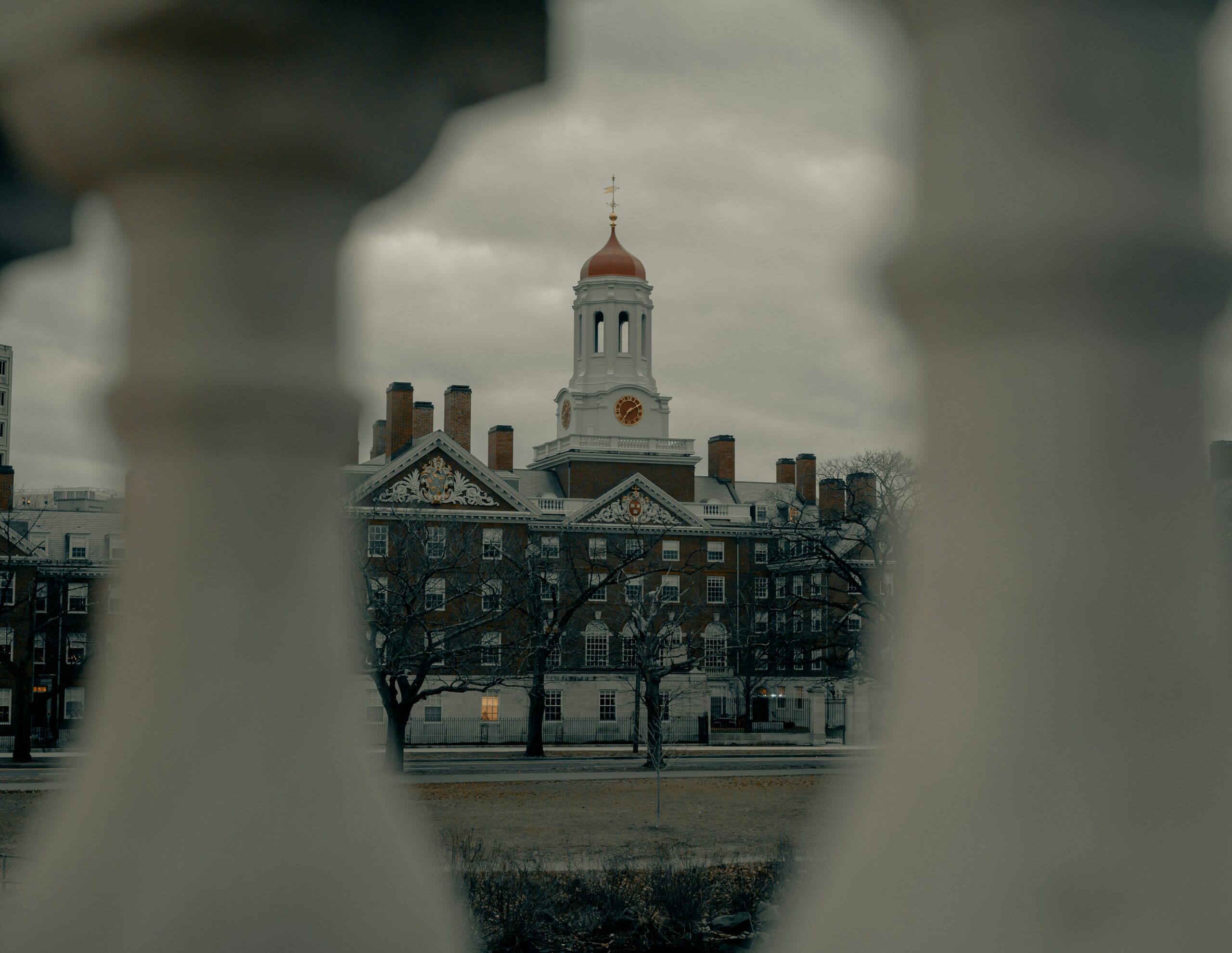
After all the ceremonies for Harvard’s Class of 2025 concluded, my fellow graduates fled Cambridge. I likewise took my leave, out to Rockport on a commuter train. With my wife beside me, I stared out the window at misty Massachusetts, eventually dozing off along the way. It was a chilly day with rain sprinkling on and off, so I donned my hoodie with HARVARD lettered in white on the front. We walked along the beach and throughout town, stopping in a shop whenever a window display caught our attention. I bought pajamas for the kids; she bought French mustard for her sister. While we paid, the lady at the counter, presumably the owner of the boutique, nodded at me, saying, “I like your sweatshirt. Who would’ve thought that Harvard would be the new protest slogan?” I mumbled a thank you but she continued to ask about graduation and my plans. When I told her I wanted to reapply for a PhD, she reassured me, “Let the funding go back to normal. It looks like it will, so when it does you should reapply.” That made sense. When Harvard had clarity and assurance on the future, perhaps then they would be ready for Ryan to come back. Later, we found a place for lunch by the water. Once again while paying, our waitress complimented my sweatshirt, presumably for similar reasons as the shop owner. After all, her and I are from the age demographic that should lean left. But I wasn’t protesting anything, or even supporting anything. I just like my hoodie.
I grew up in a conservative home. We were Christian, in a pew, every Sunday, vacations notwithstanding. Bars of soap for swear words and smacks on cheeks for disrespecting our mother. Hard work merits its own reward. Household culture and politics went hand in hand. Mom and Dad weren’t too hot on George W—we’re antiwar on principle with Mom being an Army veteran and Dad a Pinochet dissident—but Mom voted for him anyway over Gore and Kerry. During the Obama years, Mom had Glenn Beck on in the evenings while she made dinner and I did homework. Dad’s first vote after getting his citizenship was for Romney. When I filled out my first voter registration card, there was no hesitation when marking Republican for party affiliation. I don’t know how many times my parents voted for Trump with me but it was at least once. My brother and I carry on similar conservative politics in our adulthood while our sisters are left- leaning – at least, for now.
And yet politics never seemed to matter all that much growing up. It was an intellectual exercise, an economic debate around tax revenue and expenditures, on differing strategies to achieve the same foreign policy goals, and, of course, making sure our team had more players in office than their team. Even in undergrad, as young adults voted for the first time and (hopefully) considered what the country’s future should look like, disagreements were less of a fistfight and more of an empathetic headshake. Not that politics often came up in neuroscience classes; we tended to focus on objectivity and things we could observe rather than that which we could only guess at. And then Trump beat Clinton. I didn’t follow the 2016 election too closely until the debates in the fall, but after election day, the shift in rhetoric was undeniable. Older conservatives often reassured us that this is how it’s always been, and I’m sure there’s consistent vitriol on both sides, but I’m not so sure that it’s ever reached the degree that it has in the past decade. Amid constant ad hominem, the exercise has become a war.
Regardless, whenever debates over presidential policy arise, there’s often someone by my side who dismisses the subject by asserting it doesn’t matter who sits as president. To their credit, my life was pretty much insulated from executive policy until COVID hit. “Two weeks to stop the spread” was fine with me until in the ensuing January the Biden administration increased restrictions. For months, I couldn’t work and we suffered for it. The simultaneous implementation of the Inflation Reduction Act which paradoxically accelerated likewise hurt our young family. Policy aside, our household struggled in the Biden years. But, in true American fashion, I did what I could to pick myself up and press forward. I found a job that paid our bills and saved enough that I could enroll at Harvard to ditch science for literature. There I found a community far more receptive to liberalism than I ever was, than I am now, than I think I might ever be. It was the other team’s home turf, and I wasn’t wearing their jersey. But we were all collegial. Except, during political discussions, I shied away from sharing my positions, knowing that I was hopelessly outnumbered and would rather preserve friendships than win an argument. And it worked throughout my entire master’s program.
In 2024, I knew I wasn’t going to re-elect Biden; Trump’s response to the Butler assassination attempt secured my vote. As I applauded his victory last November, my Canadian father-in-law snidely remarked, “You’re probably not going to get out of this what you think you are.” All that mattered at that moment was that my team had won. Things were almost normal in the ensuing months. Life went on, I applied to PhD programs and finished my thesis. The price of gas stabilized and the cost of groceries even ticked down. Perhaps we were returning to the days of presidential irrelevancy. When Trump ordered the border closed and criminal illegal migrants deported, I applauded. When he declared the Christian truth that God made men and women, I cheered. When tariffs came down, I held on to my investments and earned a few extra dollars for my patience. And I held my breath for world peace, for my friends in Ukraine to be discharged from Putin’s army and go home. It was all going according to plan; he was doing everything that I voted for.
Then I got an email from President Alan Garber. He was responding to the imminent withdrawal of federal dollars from Harvard and how that would impact the university’s community. It wasn’t too much of a surprise since the Department of Education was already on the chopping block. Plus, my degree was already conferred at that point, and it’s the richest school in the world, so what’s my stake really? To be honest, my reaction was a subdued “hmm” and I went on with the day. There were a couple of subsequent emails on the steps the university was taking in response, along with headlines regarding the White House’s rebuttals. It all just seemed like a political catfight between diametrically opposed presidents.
Sometime during the second week of March, I received the news that I was not admitted to the PhD program I applied to at Harvard. It was disappointing, but such is life. After a week or so, I informed the professors that had written my letters of recommendation while doing my best to sound optimistic. One of the responses I received gave me pause. “It’s not you. With the change in funding across all of higher education, most programs are cutting back.” I must have reread that line a dozen times. Those same changes I had voted for several months prior…Had the president screwed me? Difficult to say, I wasn’t in the room, I don’t know everyone who applied that year, but his remark that was meant to reassure poked a hole in my paradigm. It wasn’t just Harvard’s funding that was on the table, money that could likely be recouped one way or another, it was the accessibility of my future. With the withdrawal of those funds, gaining admission anywhere became harder. Surely, it couldn’t last forever. I could reapply once this blew over and pick up from there.
Besides, there was still graduation to look forward to. The day I packed my bags, another email from President Garber – Harvard’s SEVP has just been revoked by the Department of Homeland Security. Reading it over, it seemed a serious escalation in a fight that was totally irrelevant to me. The DHS rationale made sense: if there are foreign, pro-terrorist students in the country that Harvard is at the very least overlooking, then the university cannot be trusted with SEVP until policy and enforcement changes. As more information came out, the most surprising piece of news was that over 6000 students, about 27% of the student body, were international. That seemed stunningly high. Why would any American university–or French university, or Korean university, or any other country’s institution–why would they admit more than a quarter of their students from a different country, regardless of immigration intention? Especially a university such as Harvard with such competitive admissions and (formerly) billions in subsidies from the US Government—not the Saudi Arabian government or Indian government or Swedish government. Further, if we want to curtail brain drain, shouldn’t we encourage high caliber students to study and work for a better future in their homelands? Then the realization struck me: if there’s such a dramatic drop in the student population, either there will be fewer teachers, or they’ll fill that space with American students–which means there would be room for me now. Selfish, but I felt no guilt. If Harvard’s admin didn’t want to cooperate with DHS, then the suffering of international students was on Harvard. Their loss was my gain.
Conservatism and capitalism at its best, right?
We met my parents in Boston two days before commencement. While showing them around campus, Dad asked what my thoughts were on the international students ban. “More room for me next year,” I quipped. It’s that easy for me to look him in the eyes and forget that he spent his first 27 years under Chilean fascism before coming to this country. But now he’s a citizen that has lived most of his life in the states. He chuckled and reflected the surprise I had upon learning that such a large chunk of the student body is international. Considering the facts, we both agreed that SEVP needed revisions so that American students weren’t deprioritized in its implementation. Even though that’s what I said to him, that didn’t feel quite right. If there’s to be meritocracy in higher education, shouldn’t it be internationally blind, as well as race and gender and religion and all other identifiers blind? But what about brain drain? What about providing admissions to American students at an American school? Can we trust other nations to be similarly nationally blind, or would they prefer their own as nearly all have thus far? What about national security and preventing ideological violence and harassment? Can we just put a box on applications that says “Check YES if bigoted, NO if not” or is that ineffective for obvious reasons? What about me?
What about me?
Commencement came and I was nervous. Not because I couldn’t find my friends, but because I didn’t know what was lurking outside the Yard. Would this be like last year when walk outs and continuous protests would disrupt the ceremony? Would the agitators be anti-Israeli or anti-Trump? Neither materialized, at least not in the way I expected. A few “Palestinian Genocide” banners went up but were down before most people noticed. No, the real dissent was on stage as President Garber approached the microphone. Before he could get a word out, the Yard erupted with thunderous applause. I’ve been to some special places, but I had never witnessed such a long ovation before. He tried several times to quiet the adulating crowd but it only encouraged them. While this continued, I likewise stood and applauded. Eventually, we relented so he might speak. “Members of the Class of 2025, from down the street, across the country and around the world. From around the world just as it should be.” More applause, just as elated as the first. I don’t remember much else from his speech. I could go back and rewatch it, but I don’t need to. All I need to know was his defiance and the community’s alignment. Whatever the fate of SEVP at Harvard, it would realistically not have any bearing on whether I got in when reapplying. That’s what I got out of it.
Between commencement and the beach, we attended the student association awards. I’d been heavily engaged with the writing society and made most of my friends there, so attending was the cherry on top of an already terrific day. We hugged and laughed and ate plates full of treats. In that room, I sat a table with our society’s former president and my current one. I knew the latter had a more liberal nature and was pleased with the community’s support for international students. But the former, a man that I had come to know so well, I had no idea which way he leaned. I could guess, but I’ve been wrong before. At that table, though, it didn’t matter. Even before sitting down with them, politics hadn’t mattered. The entire time we had worked together, including with other members of our writing society, no one had attacked one another on a political basis, nor had they made it a point of contention. We all cooperated, we all got along, and even though we at times disagreed, we were always friendly. I can’t think of a single time that I felt disrespected or unsupported, and I know at least some of the members of our society knew I had voted for Trump. But it was still all so human. If we can build a club and even student association where we have dramatically different politics and still succeed, why can’t we build a society like that? If our goal is to make Harvard and America the best they can be, why do politics preclude our triumph? Finding the people and the leaders that could achieve that end would be the true meritocracy, the true conservation of ideals.