At dawn, when you have trouble getting out of bed, tell yourself: I must go to work — as a human being. What do I have to complain of, if I’m going to do what I was born for — the things I was brought into the world to do? Or is this what I was created for? To huddle under the blankets and stay warm?
~Marcus Aurelius
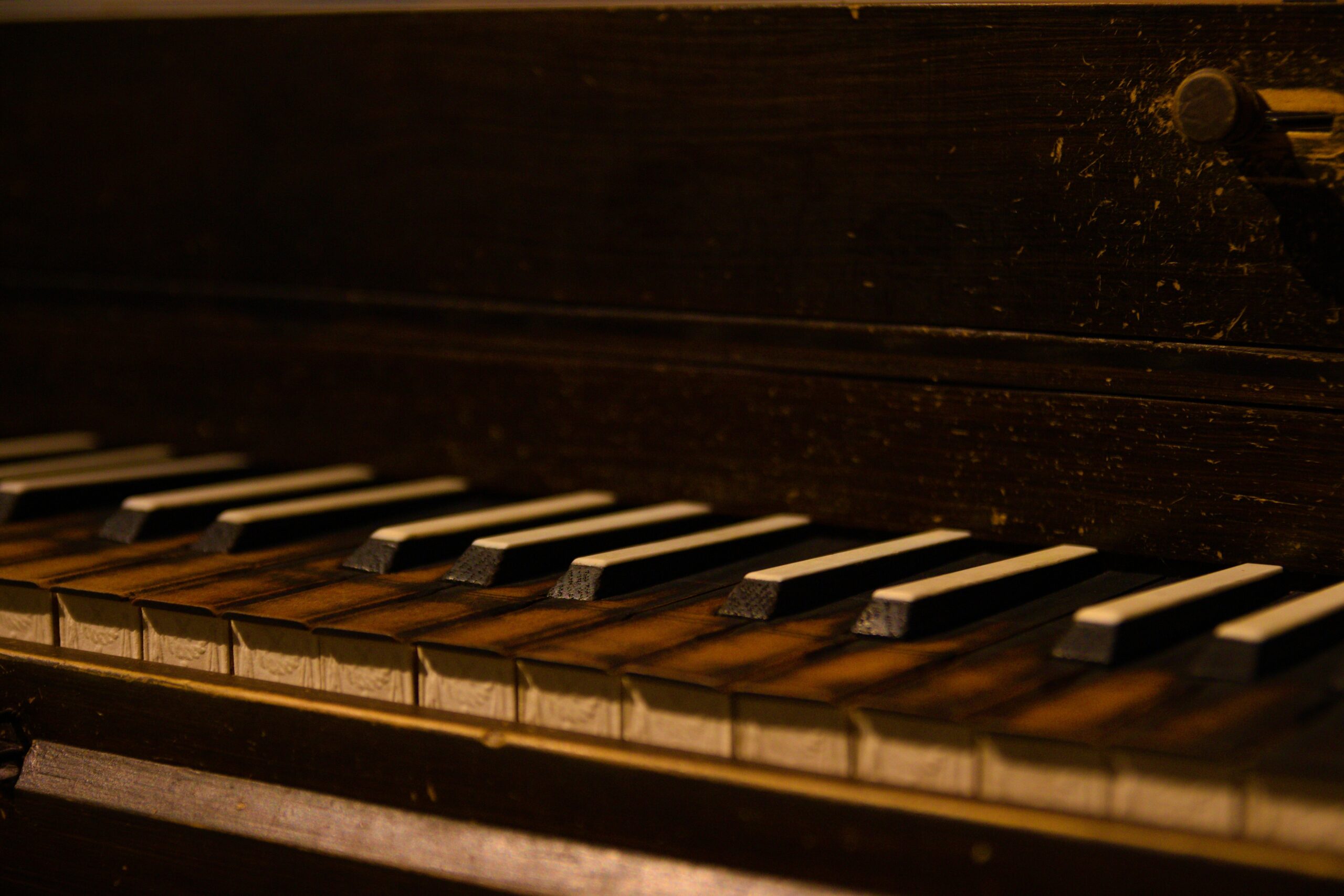
It takes longer than ever before to play through my repertoire. To be fair, the pieces themselves are lengthier and more difficult than a simple sonatina, though their cumulative number remains the same. But it’s not the length hindering my practice, rather the intense discomfort of the heavily padded leather bench. Now, of all times, when I sincerely care to practice piano rather than contemptuously doing so at my parent’s request, I eventually cannot physically bear to do so. It starts gradually, usually right after warming up with Bach’s Prelude in C Major, but it is a dull enough sensation that I can ignore the pain while it simmers. Slowly, it crescendos, and what once was a harmonic hum rises like the blaring of a tempestuous horn in my lower back. Should I ignore it long enough, it crosses a threshold where nothing will neither reduce nor intensify the pain, so I might as well keep playing until my leg falls asleep, which is just shy of an hour – and, conveniently, the point of diminishing returns for practice. Stretching afterward tends to help over the subsequent hours, as though recovering from athletic activity. Percussive to be sure, but as a technicality. It lacks the explosiveness of drum taps or crashing shoulder pads. Even simulated chaos among the keys breaks down into mathematical divisions and congruent sequences deliberately ordered by composers.
By the time I’m done practicing, all traces of sunlight have faded away and the scent of dinner is wafting throughout the house. It’s only on rare occasions that I settle in before a keyboard, on evenings when I’m satisfied there is no other work to be done, or my writing has hit a standstill. And given the chronic injury to my spine, it’s unwise to aggravate it so close to bedtime and risk an all-nighter dodging the discomfort. Refreshing as it may be to make music of my own, piano isn’t really a part of the routine. It never truly was, which I find quite unfortunate. To look back on the last fifteen or so years and think of all the hours I pissed away on video games and television and whatnot instead of using thirty of those minutes to practice piano. Perhaps then I could play through Moonlight Sonata or passably sightread Christmas songs. Truthfully, my priorities were different back then, and remain so now, and those priorities ultimately dictate the routine:
Wake up on time, seven sharp. As appealing as it would be to sleep in, huddling under a blanket is not what I was created for. And so, I set about working. After about an hour or so when the haze of sleep is entirely dispersed, it’s time for breakfast. I carry my computer down and prepare two eggs over-easy, a piece of buttered toast, and a glass of milk. Either I eat in the kitchen or in the office, but the work continues. Midday approaches, and it’s time for a break. I pack up my skates, pads, and sticks and head to the rink for lunchtime hockey. Back home, I do some auxiliary workouts while catching up on the news or a show before taking a shower. Afterward, a protein-heavy lunch, and I’ll either read or write for the remainder of the afternoon. Evenings are for hockey, either playing in a game or watching one, and homework. Somewhere in there is a small snack that could constitute dinner. Eventually, ten o’clock rolls around and I consider going to bed, though I know well enough that even if I lay down, I won’t actually get to sleep until eleven at the earliest, but almost always before twelve. Then dawn comes around, the alarm goes off, and I do it again. Throughout it all, the thought of playing piano scarcely crosses my mind even though I pass the instrument at minimum two dozen times a day. An up-tempo rhythm sets the daily pace, not one in common time or a waltz. Each beat is carefully measured, falling into place with the precise timing demanded by a composition of my own crafting. Day by day, tapping onward, steadily clicking like chronographic snare. No flares, no paradiddles, just the steady beat of 2/4 march fading in and out each time the sun crosses the horizon.
At a family dinner, my-brother-in-law brought up his daily duties as a manager at a coffee stand. In essence, utter chaos, and not of his own making. To hear him tell it, their location is the one the franchisee sends failing employees to, either to shape up or lose their job. But despite the difficulties of running a half-errant crew, he was reportedly comfortable with his position in life and the routine he had developed. “But maybe being comfortable with a routine,” he said, “Is just a sign of being stuck in a rut.” As the meal went on, I thought of ways to refute the statement. A comfortable routine and being stuck in a rut could not be one in the same. Most glaringly, routines provide building opportunities, especially when it comes to higher education, professional projects, and career growth. Successful athletes develop routines of practice, eating, training, and recovery. The greatest minds in history developed routines, thus maintaining a healthy body and mind. Writers have routines of their own, most often crafted to the individual’s preference of environment and comfort, and thus craft, build, edit, revise, and publish. Eating elephants bite by bite and building Rome day by day. The fruits of a successful routine. Stuck in a rut – ridiculous and short-sighted.
Could it be that he was executing an unsuccessful routine? Sure, his work life was in order, but he hardly mentions much about life beyond the timecard. Perhaps his routine was helping him get through the day, but not much further than that. Creating a weekly schedule for employees and checking inventory are hardly momentous projects with a long-term payoff. His rhythm and timing were out of sync. He switched it up recently, now he’s performing at open mic nights a few times a month. Whenever he brings up the subject, he mentions potential paid gigs down the road. From there, who knows where it could lead? The possibilities are endless and the dreams infinite. Perhaps that’s what keeps us out of a rut, having a vision for the future beyond clocking out at the end of the week. Something worthwhile to build a routine around. No more talk about ruts anymore, but then again, he tends to overplay his pessimistic hand.
I love when Monday morning comes around and I can take up my routine once more. Truly there is satisfaction in pressing onward and accomplishing the things I set out to do, whether that’s a momentary dopamine release or an abiding sense of fulfillment. Dad always said, “Hard work is often its own reward,” whenever it was time for me to pull weeds or mow the lawn. Now that I’m tending to a garden of my own, I understand what he meant. The opportunity to shape and mold something in this world, to participate in an act of creation, is rewarding by virtue of the experience, and it endures after the finished project emerges. Harder labors yield higher rewards, so I press on and on with a vision in mind.
In the middle of one of my workouts, my wife interrupted my routine. She crossed the threshold into my garden and pulled me into the bathroom. Lying next to the sink was a plastic stick with a cap over the urine-soaked tip. It was like the explosion of a cymbal, hushing the unison marching drums with an insolent crash. Granted, this was part of the composition but meant for much later in the piece when the groundwork was firmly established in the lead up to a variation on harmony and melody. Instead, it stopped the music cold. I wasn’t ready for a child, neither of us were. Thoughts of finances, time management, sleepless nights, diapers, school districts, holes in the wall, and stains in the carpet flooded my mind all at once, shoving aside any chance of taking up the daily routine. The rest of the week dragged by as if to the disdainful beat of a broken metronome, clicking asymmetrically on the down and upbeats.
Saturday came and I had the house to myself for a couple hours in the evening. With little else to do, and not enough focus to write, I sat down at the piano and began to play. Some of the songs I’d known for a decade or so, others for only a month. The pain in my back flared, but the new meds combined with concerted physical therapy were keeping it mostly at bay. I played on, reaching deeper and deeper into the sheet music for pieces I hadn’t heard since living under my father’s roof, songs that held no meaning in the interim but renewed their influence now, disrupting the routine of my routine’s disruption. Calling out from the keys, like soft cries in the night, their somber melodies and haunting harmonies enveloped me once again, as though I were the child. Tabula rasa, or something like, the erasure of the familiar to make room for a new project. A fresh adventure, hopefully one that would be kind to my spine, a new routine. Notes hang in the air like a fermata in anticipation of a new phrase, for an anxious renewal as though plunging into a cold pool – a distilled variation.