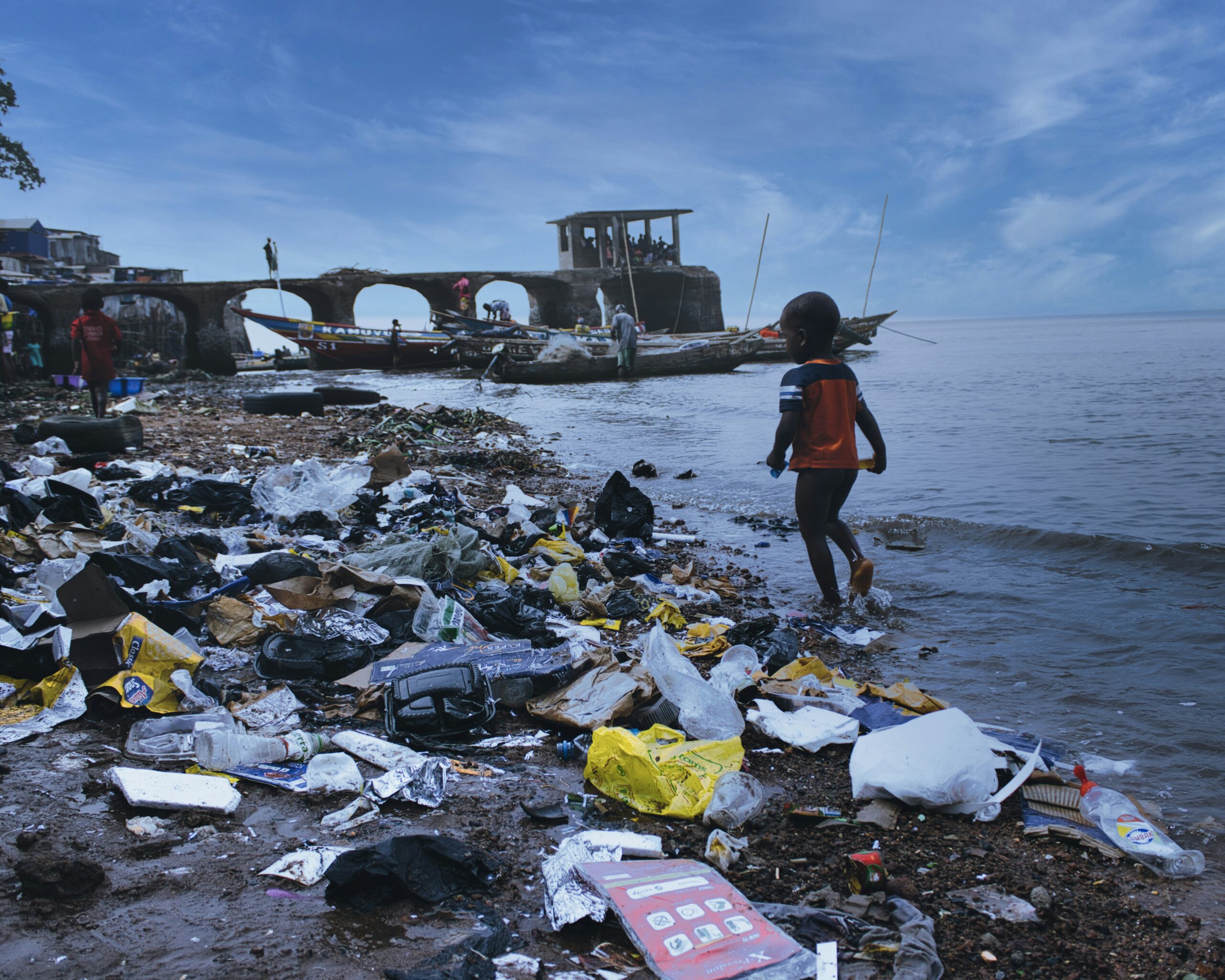
Earth is a living organism. As she orbits the sun and rotates on her axis, she wakes up with the first light, and the flora and fauna come to life. And as she submerges into the darkness, she falls asleep under the stars, extending an invitation to dream.
When Earth wakes up, she drinks water. Everything in the morning is covered in dew as we wake up with a natural thirst for the start of the day.
Rhinos start the morning by rolling in the mud to keep cool during the day. Blue whales, gorillas, and pandas start their day with breakfast. Tigers like to nap in tall grass.
Dolphins come to the surface to play under the first rays of the sun. Turtles sunbathe floating on the waters. Even grass leans in the direction of the Sun.
There isn’t a being on our planet who does not need air, water, and food. The natural recycling channels Earth has gifted us have previously taken care of these basics.
Natural recycling channel, aka ecological recycling, is a process of natural forces that break down dead organic matter and reuse it as essential nutrients in our ecosystem to maintain a healthy planet.
But now, our planet is heavily polluted, and her natural recycling channels have become disseminators of toxicity.
The proportion of natural recycling channels clogged by plastic debris and poisoned by its lethal particles is becoming more prevalent, and our ecosystem is losing the fight to live. The evolution of life on Earth is now irrevocably altered because of garbage.
Growing up, I knew a different Earth. I spent summers in a village in central Russia that has been there for centuries. No one knows how old our village is.
Meadows of wildflowers engulfed it with dreamlike landscapes. The colorful fields were breathtaking, and the flower scent was supernatural. We loved to lie in the grass under the warm sun, watching bees, dragonflies, and butterflies fly from one flower to another.
Flowers would open in the early morning, covered in dew, as if the flowers were bathing their petals. The sun would reflect and sparkle in dewdrops. Then, flowers close in the evening to sleep.
Beautiful gardens were all around. We had an abundance of cherry and apple orchards. Maybe fifty different kinds of apples generously covered varieties of trees, to the point where it seemed there were more apples than leaves on the trees. When the apples are fully ripe, they fall from the trees. The same is true for cherries; ripened, they become so heavy that the branches almost touch the ground.
I loved to read on the branches of the giant trees at the end of our garden, at times, watching the caravan of ants carry their cargo of eggs, food, tiny branches, and other objects over my toes.
When the sun was at its zenith, it was nice to nap in a hammock under the rowan trees or picnic in the shade by the tiny river behind our garden. The river was hidden under white and yellow lilies, and weeping willow trees spread their branches to the ground on both sides.
Note: Whipping Willow trees live around 30 years, so replanting them to beautify our surroundings is a recurring task. Watching something you planted grow is a very special experience.
We cut the grass with peasant tools at sunrise. The scent of freshly cut grass is lovely. Wild cats and hedgehogs sleeping in the grass would run away as they heard us. I loved playing with hedgehogs. Hedgehog needles would open, and a beautiful face would look at you with reciprocal curiosity. They love it when you gently rub their tummies. They love warm milk.
I remember one morning, while cutting grass, our blade cut the belly of a wild cat. She could not move because she was pregnant but could not give birth to her litter on her own. She was too weak to move. She was dying.
We carried her to our house, where my grandfather treated her cut and helped her give birth by gently massaging her belly, synchronizing his movement to her breath. We had five kittens.
We spent the summer nurturing them. While she healed and rested, we fed kittens warm cow milk and later small bits of meat and medicinal grass, kept them contented, and ensured they always stayed with their mother.
Each week, she grew stronger but was very gentle with us. My grandfather forbade me from playing with kittens. He said they will leave and live their lives as wild cats, and we must preserve this.
One morning in August, I woke up and she and the kittens were gone. I woke my grandfather up crying. He got up and we went to look for them. As we opened the door, there she was, a huge, wild, dead rat in front of us. I screamed, but my grandfather calmed me. Then, he pointed at the rat and said, “This is a thank you.” From her.
Cutting the cat’s belly was an accident. But today, we are killing our habitat not by accident but by design. Since 1970, humans have killed at least 60% of wildlife, causing irreparable damage to ecosystems.
Sadly, the animals cannot push back. But if we listen, they will tell us they are hurting. They communicate well. All animals are intelligent.
Like us, they have subjective experiences. They sense and comprehend the world around them.
Like us, they experience a full range of emotions:
anger
compassion
despair
disgust
embarrassment
fear
grief
happiness
jealousy
joy
love
pleasure
rage
relief
resentment
respect
sadness
shame
And they are incredibly responsive.
So is the flora. If you love it and take care of it, it will shower you with nature’s bounty.
And it did. Red and white raspberries, black, white, and red currants, gooseberries, blackberries, blueberries, strawberries, cowberries, and cranberries fenced our houses. Most imaginable vegetables, fruits, and herbs suitable for the climate were planted early in the spring. The water in wells was icy cold, crystal clear, and incredibly clean.
There is a limited time to harvest fully ripened berries; otherwise, tiny caterpillars will eat away all the leaves, and the sun will burn the berries. Nature will recycle them, a circle of life.
The same goes for all crops; if not harvested on time, the Earth will take them back, but now, through the natural recycling channels contaminated by toxic substances and obstructed by plastic debris.
Plastic pollution is killing everything organic on Earth.
AirNow.gov shows the air quality daily, and from there on you can decide whether to keep windows open or even wear a mask when outside. Our dawning reality.
Outdoor air pollution alone kills 8 million people globally each year. And the upward trend is accelerating more and more rapidly.
It causes stroke, heart disease, lung cancer, chronic respiratory diseases, and many other illnesses. It is the number 2 cause of death in adults after high blood pressure and in children after malnutrition.
The children breathe this contaminant air while their organs are growing, and their immune system is developing.
The especially vulnerable segment of the population is children under 5 years old. The damage starts at conception, and it is life-lasting.
Pollution causes premature birth, birth defects, low birth weight, the rise of certain cancers, degenerative lung diseases, and other illnesses. 700,000 children under the age of 5 died in 2021 because of pollution.
But growing up, we lived this organic life when Earth was not so dry and poisoned. People respected natural processes, practiced environmental stewardship, and minimized synthetic or harmful substances as an approach to life.
We had countless wetlands. There is nothing better than leaving your rain boots behind and running barefoot outside to play in the wetlands in the rain.
Especially in the river, when the rain is pouring hard, and within minutes, the sunshine comes while it is still raining. Only you and the frogs enjoy popping rain bubbles on the water, in the weather where all else is running for cover. Even flowers close in the rain.
Wetlands, permanent and seasonal, are fundamental for life on Earth. Wetlands are essential for cooling the planet, filtering pollution, nurturing habitats for wildlife, and many other critical functions for all inhabitants of our planet.
Over 85% of the wetlands that existed in 1700 no longer exist in 2000. In point of fact, almost all sources of unsalted water are diminishing or becoming contaminated.
“Residents of New Jersey who drink tap water could be getting a dangerous cocktail of hundreds of chemicals, heavy metals, and radioactive substances every day, according to an analysis of the nation’s drinking water supply released in February 2025”. Patch Newspaper
But back then, we were fully immersed in the natural world. We had an immense and beautiful forest that had been there for hundreds of years. The forest was overflowing with large porcini mushrooms, chanterelle mushrooms, and other varieties. Tiny wild strawberries surrounded them under each tree. These are my favorite berries.
Note: You have to cut the mushroom off the bed of roots. If you pull the root, a mushroom will not grow there next year or ever again.
The trees in the forest were all arranged in squares, equally divided and evenly spaced out. I once asked my grandfather why the trees were all in squares. He answered: It is because our great,
great, great grandparents planted them for us.
This is what we inherited. The enchanting nature was well-preserved, and the air was clean.
This world no longer exists.
The village is now engulfed in pollution, not endless fields of flowers. Vast fields of wheat, sweet peas, and corn are covered with plastic debris. Gardens are not producing any harvest and are dying one by one.
Even potatoes, when harvested, are green. If potatoes are green, it means they can cause illnesses. We used to discard such potatoes. We did not replant or feed them to animals.
Our river dried up, and all the frogs, hedgehogs, and wild cats disappeared. The water in wells became contaminated to the point that it is hazardous to drink. The air is so polluted
that it is often foggy.
Younger generations left the village.
We create catastrophic obliteration every day because of our wastefulness. New generations will be unable to clean up the pollution fully for centuries, and we as a species seem unconcerned about it.
Today, 500 million tons of plastic are manufactured every year, half of which is single-use plastics. About 90% of plastic ends up in landfills or the environment. Plastic takes over 400 years to decompose, and its constituents degrade longer.
Biodegradable materials, anything organic to our planet, are broken down by microorganisms, bacteria and fungi, into organic composites.
This results in the formation of water, renewed nutrients for agriculture, and biomass, to name a few. Biomass is any organic matter derived from recently living organisms, like plants and animals, that are converted into electricity or heat, or fuel.
The purpose of biodegradation is to reduce pollution, clean up the surface, and maintain the health of our environment, so Earth can breathe.
Plastic is not biodegradable. Plastic is made from synthetic polymers and is designed to be unaffected by natural processes and resistant to decay. No microorganisms on our planet can break down plastic.
Instead, over thousands of years, plastic will be poisoning our environment as it will slowly be becoming microplastic. Then, slowly, microplastics will transform into smaller particles called nanoplastics. And so forth. Nanoplastics’ constituents degrade often hundreds or even thousands of years.
During this decomposition process, plastic spreads everywhere as a cancerous web: water, air, soil, food, and all forms of biology: plants, animals, and humans. This plastic infection is accelerating each year at an alarming rate.
Today, the average human consumes around 5 grams of plastic every week, approximately the size of a credit card, or a plastic bottle cap, or it can fill a soup spoon with microplastic. Plastic is in every organ of living beings: brain, liver, lungs, kidneys, blood, heart, stomach, bone marrow, lymph nodes, placenta, breast milk, and a newborn’s first stool.
Doctors are puzzled by the question of where plastic and our bodies are headed, and how and if it can be recycled out of our organs. We do not know yet.
The average human brain contains around 7 grams of microplastics, which increased by 3.5 grams from 2016 to 2024. This too makes sense because of the rapidly mounting plastic production that is projected to triple by 2060.
By 2050, the ocean will contain more plastic by weight than fish, and global plastic debris will reach 30 or 40 billion tons unless we repurpose all plastic waste into recycled and needed materials and products.
11 million metric tons of plastic are thrown into the ocean every year; 80 garbage trucks per hour; 1 garbage truck every 45 seconds.
95% of the plastic is sunk to the seafloor. Almost all marine animals and plants are infected with plastic.
The ocean covers 70% of Earth’s surface, holds 97% of Earth’s water, and produces at least half of Earth’s oxygen. Although the ocean produces 50% of the oxygen, marine life consumes a sizable portion of it.
Like us on the surface, marine animals and plants require oxygen to survive. There are areas in the ocean that cannot support life because the oxygen levels are extremely low. They are called dead zones.
The oxygen in the atmosphere accumulated over hundreds of millions of years, and we poisoned it in a few decades. If we continue disrupting ecosystems, life on Earth will be unsustainable.
Microplastics travel a significant distance through the air, as far as the Arctic and Antarctica.
The current warming of seawater and melting glaciers and ice sheets are expanding oceans and raising sea levels. Plastic is already in glaciers and ice sheets, making them absorb light and melt faster. The oldest glacier ice in Antarctica is 1,000,000 years old.
The global sea level has risen 8–9 inches since 1880. From 1993 to 2023, the sea levels rose 4 inches. Can you see the trend developing here?
We are protecting our yet-to-be-ripe avocados by way of one-time use plastic containers as we get them delivered to our homes, and simultaneously and almost ruthlessly, destroying the natural world around us, by doing so.
A bruised avocado.
I am not sure how and what we are rationalizing, but self-deception is a dangerous loop. We are like the kid who is sawing away on the branch he sits on.
Our ecosystem is deteriorating and, in many areas, fading. No one knows how many species are on Earth and, consequently, the importance of each for the continuation of life on our planet. Data deficiency makes it hard to understand the world we live in.
Like Mendeleev’s Periodic Table of Elements, we know these unknown properties exist, but what they are, we do not know. And, of course, we do not know what we do not know.
What we do know is that the current rate of species extinction is thousands of times faster than the natural extinction rate in the last 10 million years.
Today, 1,000,000 known plant and animal species are threatened with extinction. The permanent disappearance of a species because of garbage is one of the key reasons for climate change.
To illustrate how significant all life is, tiny, plant-like organisms called phytoplankton live in the ocean’s surface waters and produce at least 20% of the oxygen on the planet.
Below are just a few critically endangered species.
African forest elephant
Amazon Pink River Dolphin
Amur Leopard
Asian elephant
Bengal Tiger
Black Rhino
Bluefin Tuna
Blue Whale
Bornean Orangutan
Cross River Gorilla
Eastern Lowland Gorilla
Giant Panda
Hawksbill Turtle
Javan Rhino
Orangutan
Sumatran Elephant
Sumatran Orangutan
Sumatran Rhino
Sunda Tiger
Western Lowland Gorilla
Below are just a few species that have recently gone extinct.
Campo Grande Treefrog
Chiriqui Harlequin Frog
Eastern Cougar
Formosan Clouded Leopard
Gastric-Brooding Frogs
Golden Toad
Lost Shark
Pinta Island Tortoise
Pyrenean Ibex
Vietnamese Rhino
Western Black Rhinoceros
Yangtze River Dolphin
We created this manmade plastic pollution crisis. Only a few generations of us have done it. If we ignore it, maybe the temperatures will rise faster, and there will be a lot more fires, and sea levels will rise to the point that the oceans will wash us away.
Then, it will take Earth centuries to recover. And maybe after, a new civilization will settle here. Who knows? I think for certain it will not be us.